
The stereotype of the “difficult in-law” has existed for generations. Many people have heard stories of the overprotective parent, the skeptical family member, or the partner who never seems to be fully accepted. While these stories are often shared with humor, the reality behind them can be far more complex.
Why do some parents struggle to accept their child’s partner, even when that person consistently demonstrates kindness, respect, loyalty, and integrity?
The answer is rarely simple.
For some parents, accepting a new partner means accepting that their role in their child’s life is changing. The child who once relied heavily on them for guidance, comfort, and approval is now building a life in which another person becomes a significant source of love, support, and influence. Sometimes this transition can feel like a loss of control over their offspring—not necessarily because they want to control their adult child, but because they are adjusting to a reality in which their voice may no longer carry the same weight it once did. Change can be difficult, especially when it requires letting go of a role that has been central for many years.
However, not every challenge with in-laws comes from fear of change. Sometimes it comes from assumptions.
There are many forms of prejudice. Whether it is classism, racism, cultural differences, age differences, religious beliefs, educational background, economic status, or simply an unexplained dislike, preconceived ideas can influence how people are perceived before they are truly known.
People often judge suitability by career, education, financial status, family background, or social standing. While these things may reveal opportunities or circumstances, they reveal very little about character. Someone who appears ordinary on paper may possess extraordinary qualities—kindness, loyalty, emotional maturity, integrity, and resilience. Likewise, someone with an impressive résumé may lack the compassion, humility, and respect needed to sustain a healthy relationship. Character is measured far more by how we treat people than by what we have achieved.

The Invisible Test
Not every difficult in-law is motivated by prejudice. Sometimes the tension comes from family dynamics that existed long before a partner entered the picture. A parent may struggle with letting go, a sibling may feel displaced, or long-standing patterns of control, favoritism, or emotional dependence may become more visible when someone new joins the family. In these situations, the significant other can become the person blamed for changes they did not create.
Some families treat acceptance as something that must be earned. A new partner may feel constantly tested, compared to invisible standards, or judged for every perceived mistake. When every action is analyzed, every disagreement is magnified, and every difference is viewed negatively, it creates an environment in which connection becomes difficult. Relationships suffer not because love is absent but because trust, respect, and healthy boundaries are.
Guidance or Control?
Balance is important, however. Not every concern raised by parents or in-laws is unfair. Sometimes families notice warning signs that someone in love may overlook. Genuine concern has a place when it is expressed with humility, respect, and care. The challenge is recognizing the difference between guidance and control, between wisdom and prejudice, and between protecting someone and making decisions for them.
These dynamics can place tremendous pressure on a couple. They may find themselves trying to honor their relationship while also navigating the expectations and emotions of two families. Without healthy boundaries, outside opinions can slowly create distance between two people who once felt united.
Beyond First Impressions
There is another perspective worth considering. Every person enters a relationship carrying some form of baggage. It may come from childhood experiences, previous relationships, family dynamics, insecurities, disappointments, or unresolved pain. None of us arrives as a blank slate. We all bring experiences that shape how we respond to unfamiliar people and unfamiliar environments.
Joining a new family can be intimidating. There is often an unspoken desire to make a good impression, to be accepted, and to avoid saying or doing the “wrong” thing. At the very moment someone is trying their hardest to be liked, they may also be navigating anxiety, uncertainty, or the pressure of feeling that every word and every action is being evaluated. That is one of the reasons I have never placed much weight on first impressions. This is not to say that we should not always strive to present the best version of ourselves. We absolutely should—character, respect, kindness, and integrity matter.
But life is not lived under perfect conditions.
Sometimes a person is grieving. Sometimes they are exhausted from work. Sometimes they are overwhelmed, socially anxious, or simply having a difficult day. Sometimes cultural differences, personality differences, or nervousness affect how they communicate. A single awkward conversation, a misunderstood joke, or an anxious silence can unintentionally create an impression that lingers far longer than it should.
The danger of relying too heavily on first impressions is that they can become permanent conclusions drawn from fleeting moments. Once an opinion has been formed, people often begin looking for evidence that supports their initial judgment while overlooking everything that contradicts it.
Perhaps instead of asking, “What was my first impression?” we should ask, “Have I given this person enough time to reveal who they truly are?“
People deserve the opportunity to be known beyond a single moment because a moment rarely tells the whole story.
The Stories We Tell
This dynamic is not limited to real life; it is also reflected in the stories we tell. While watching a Turkish series, I found myself thinking about how often these themes appear. In the story, a mother immediately rejected her son’s partner because she is from a village. Before truly knowing the young woman, she labeled her as low class, assumed she was uneducated, questioned her character, and portrayed her as a gold digger unworthy of her son.
The deeper issue, however, was that the mother had already chosen her daughter-in-law. The woman she preferred was a close friend of her son’s, and welcoming her into the family represented a step up socially and access to circles the mother wanted to be in. Because of that, the young woman from the village was never given a fair opportunity to be known. She was judged against someone else’s expectations rather than by the content of her own character. The mother even manipulated situations, lied, and mistreated her when her son wasn’t present, only to portray herself as the victim when he was.
Although fictional, the storyline reflects something that happens in real life. Sometimes people become so attached to the story they have written that they begin searching for evidence to support it rather than allowing the truth to unfold naturally.
I experienced this personally when I first met my former husband’s family. My first encounters were challenging. His mother completely disregarded me during our initial interactions, and later his father accused me of being pretentious. Over time, I came to understand that some of those reactions were rooted in assumptions about who I was. My darker complexion seemed to lead to assumptions about my upbringing, education, and social standing—assumptions that did not reflect reality. I was, and still am, a dark-skinned woman who is articulate and strong mentally, emotionally, and physically. I grew up speaking Standard English. That was my upbringing and a natural part of who I am.
Because I did not fit the assumptions that had been made about me, my manner of speaking, the way I carried myself, and my confidence were interpreted by some as pretentious rather than simply authentic.
That experience taught me how easily people can mistake confidence for arrogance when someone does not fit the story they have already written in their minds. Some of the things I was accused of were difficult to comprehend because they simply were not true. I learned that people sometimes create narratives about others to justify their own perceptions and actions. Once a story has been created, it can become easier to defend that story than to truly get to know the person standing before them.
For many years, we butted heads. I stood up for myself because I believed my dignity deserved protection. There were moments when I was reactive, especially when I felt my honor was under attack. Looking back, I recognize that some of my responses came from a place of hurt and self-defense. I was learning how to protect myself while also learning how to respond differently. With time, I discovered that I did not have to defend myself against every misunderstanding. Not everyone will be willing to see beyond their own perception, and constantly trying to prove your worth can become exhausting. Eventually, I chose peace over proving myself.

When Time Changes Everything
Ironically, time has a way of revealing what arguments cannot. Although my former mother-in-law and I experienced years of tension, something changed during the final years of her life. By then, her son and I were no longer together. Yet she entrusted me to become one of her primary caregivers. That responsibility meant more to me than words could express. It represented trust, vulnerability, and a willingness to see each other beyond years of misunderstanding.
It remains one of the greatest expressions of trust I have ever received. That experience reminded me that people can grow beyond their assumptions. Relationships can evolve. Hearts can soften. Sometimes the person we once struggled to understand becomes someone we come to appreciate deeply.
The Power of Being Truly Known
My experience is not intended to portray my former husband’s family negatively. Every family has its own history, fears, expectations, and challenges. Rather, it serves as an example of how assumptions—whether based on appearance, background, culture, personality, or expectations—can create barriers that don’t have to exist.
Regardless of prejudice, preconceived ideas, or the expectations others may place upon me, I remain unapologetically myself. I have learned that authenticity does not require permission, and self-worth is not determined by the stories others choose to talk about me. My responsibility is not to become someone else’s version of who I should be but to continue living with integrity, compassion, confidence, and grace.
Perhaps the real question is not whether someone is good enough for the family. Perhaps the better question is this:
Are we willing to set aside our assumptions long enough to truly know the person standing before us?
Families are not strengthened by forcing everyone to fit the same mold. They become stronger when they create space for honesty, growth, forgiveness, and understanding. Welcoming a new person into a family does not take love away from those who were already there. It expands the opportunity to experience love in a new way. The strongest families are not those without conflict. They are the ones willing to challenge their own biases, communicate openly, respect boundaries, and allow people to be known for who they truly are rather than who they were assumed to be.
Because sometimes the greatest barrier to acceptance is not the person entering the family. It is the story the family decided to believe before they ever took the time to truly know them.
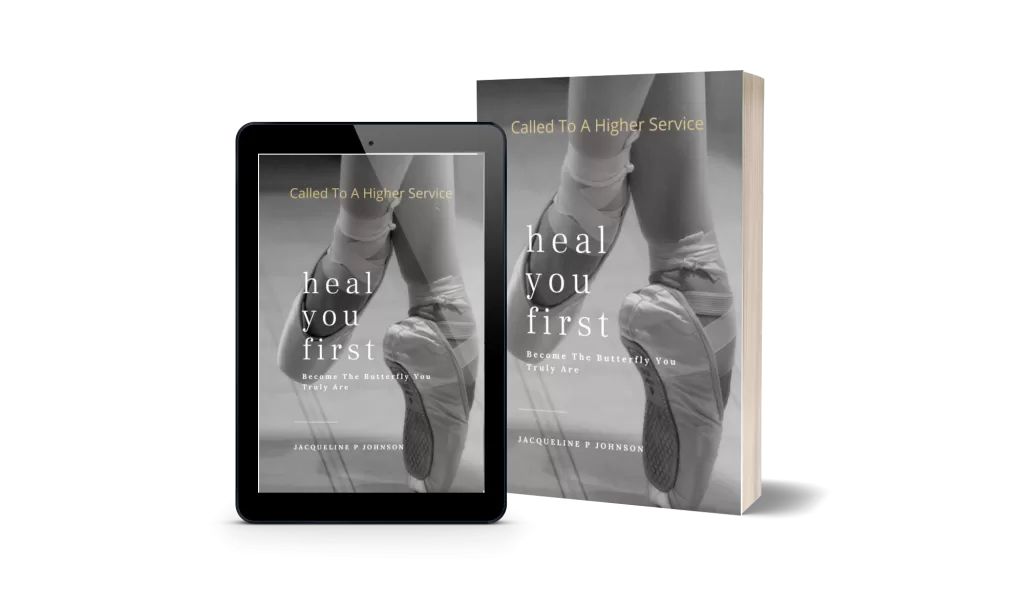
Are you longing to break free from the chains that bind you and discover the path to true healing and growth? In “Heal You First,” embark on a biblical journey of self-discovery and inner transformation.
Discover the Power of Faith and Fearlessness:
A Transformative Metamorphosis: Confront challenges, embrace storms, and emerge stronger. “Heal You First” is not just a book. It’s a transformative guide that uses Bible verses with practical steps for inner healing. Are you ready to embrace the biblical path to healing and become the powerful, magnificent vessel God has created you to be?
HEAL YOU FIRST, GET THE BOOK

Read more Lifestyle Features
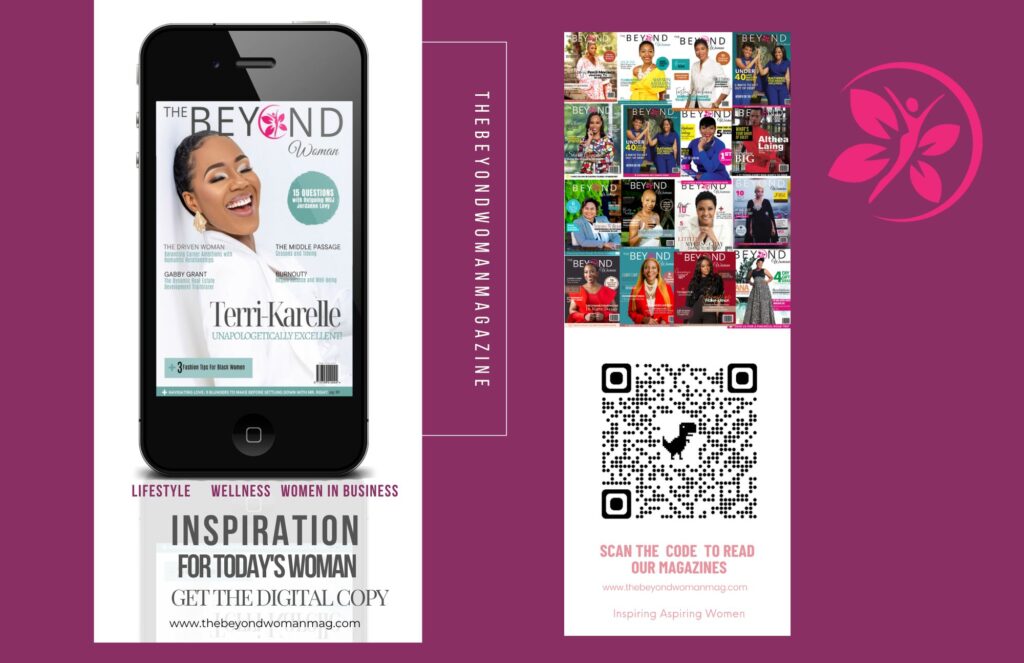
Read Our Magazine
WE INVITE YOU TO LISTEN IN ON OUR LATEST PODCAST CONVERSATION. HELP OUR PLATFORM GROW BY SUBSCRIBING ON YOUR FAVOURITE PLATFORM.
What does it mean to build a life of impact without losing yourself in the process?
In this episode of TheBeyondWoman Conversations Podcast, host Jacqueline Johnson sits down with Trinidad and Tobago entrepreneur, author, and systems strategist Krystle Phillips for an honest conversation about leadership, visibility, entrepreneurship, and the evolution of personal identity.
As the founder of multiple businesses, including Your Equipment Suppliers (YES), Krystle has dedicated her career to helping entrepreneurs, farmers, and agro-processors across the Caribbean build stronger, more sustainable businesses through better systems and operational design. She is also the author of Breaking Barrels: Unparenting the Parent. And Misdiagnosed: Why Micro Agro-Processors Are Set Up to Fail.
Together, Jacqueline and Krystle explore what it means to step into greater visibility without sacrificing authenticity. Why sustainable success is built on systems rather than constant hustle. And how Caribbean women can embrace both strength and femininity while leading with confidence.