

For a while now, I’ve been thinking about something that I don’t hear enough small business owners talking about. What happens to your business if something happens to you? Not necessarily something dramatic. I mean, what if you were suddenly unable to work for a few weeks? What if you were in an accident, became seriously ill, had to travel unexpectedly, or simply couldn’t get to your phone or computer?
Could someone step in and keep things moving?
Or would everything come to a complete stop because you are the only person who knows how everything works?
I think this is a particularly important question for women who have built businesses around themselves. You know the business. You know the passwords. You know which supplier to call when the regular one is out of stock. You know which customer is waiting on an order. You know where the invoices are. You know what needs to be paid and when. You know what the client really meant when she sent that three-word WhatsApp message.
You know everything.
And that may be exactly the problem.
Your Business Should Not Depend Entirely on Your Memory
Many small businesses start this way: you are the owner, salesperson, accountant, customer service representative, social media manager, and sometimes the person packing the orders at midnight. It makes sense in the beginning, but as the business grows, keeping everything in your head becomes a liability.
If someone had to take over tomorrow, would they know:
- How to access your business bank account?
- Where your important documents are?
- Which suppliers you use?
- Who owes the business money?
- What bills need to be paid?
- How to access your website?
- Who manages your domain?
- Where is your customer information stored?
- How to access your social media accounts?
- What subscriptions and software does the business pay for?
- What orders are currently outstanding?
- Which clients need to be contacted?
If the answer to most of these questions is no, you have some work to do. Not because something bad is going to happen, but because being prepared is part of running a business.
Make a “If I’m Not Here” File
This is one of those things that sounds morbid until you realise how practical it is. Create a simple document that tells someone what they would need to know if you suddenly couldn’t manage the business. It doesn’t need to be complicated; call it something like “Business Continuity File” or, if you want to be more direct, “If Something Happens to Me.”
Include things such as:
Business information
- Business registration documents
- Tax information
- Bank information
- Insurance policies
- Important contracts
- Licences and permits
People
- Employees and their contact information
- Key suppliers
- Important clients
- Accountant
- Attorney
- Other professionals you rely on
Money
- Outstanding invoices
- Upcoming payments
- Loans
- Recurring expenses
- Payroll information
Digital access
- Website
- Domain
- Social media
- Accounting software
- Cloud storage
- Online payment platforms
The goal isn’t to hand someone a giant list of passwords. In fact, don’t put all your passwords into an unsecured document; instead, consider using a reputable password manager and make sure the person you have chosen knows how to access it if necessary. The important thing is that the information isn’t trapped inside your head.
Choose One Person Who Actually Knows
This is where I think many of us need to get uncomfortable.
There may be several people who know about your business, but that doesn’t necessarily mean they know how to operate it. Your husband may know that you own a business. Your daughter may know the name of the business. Your sister may know where your office is. But if you were suddenly unavailable, could any of them actually answer the question, “What needs to happen tomorrow morning?”
It is worth choosing at least one trusted person who understands the business to step in and help if necessary. They don’t necessarily have to run the business permanently; they simply need enough information to keep things from falling apart while decisions are being made. And that person doesn’t have to be a family member. In fact, it might make more sense for it to be a business partner, senior employee, accountant or another trusted professional who already understands how your business operates.
Think Beyond Your Physical Business
Here is something many business owners overlook: your business doesn’t only exist in your office, store, or warehouse. A huge part of it exists online.
Your Instagram account might have thousands of followers, your website might generate sales, and your email list might contain years of relationships.
You may have digital products, photographs, designs, written content, intellectual property, customer records, and years of work stored in the cloud.
But who owns those things? Who can access them? And what happens to them if you are no longer able to manage them? This is particularly important if you are a one-person business. Your Instagram password may be in your phone, your website login may be saved in your browser, your business email may be connected to your personal email, and you may not even know who technically owns your domain. These may seem like small details when everything is running smoothly, but they become very important very quickly when you are suddenly unable to manage the business yourself.
And What About Your Customers?
This is one of the areas that deserves more thought. Imagine you run a business where customers have already paid for products or services, and then you are suddenly unavailable. Who knows what has been paid for? Who knows what hasn’t been delivered? Who knows which customers are waiting and how to contact them? Your customers should not have to discover that something has happened to the owner because their emails and WhatsApp messages suddenly go unanswered. Having a basic continuity plan protects not only you and your family, but also the people who have placed their trust in your business.
Don’t Assume Your Family Automatically Gets the Business
This is another uncomfortable conversation because owning a business and leaving a business to someone are not necessarily the same thing. If you have a registered company, shares, business assets, intellectual property, equipment, inventory, money in business accounts, or other valuable assets, you need to understand what happens to them if you die. That is where your attorney and financial professionals come in. You may need a will; you may need to think about how your business ownership is structured, and you may need agreements in place if you have business partners. The rules will differ depending on where you live and how your business is structured, so don’t rely on what your friend told you happened when her father died or what someone posted on Facebook. Get proper professional advice. It may cost you something now, but sorting out a business after someone’s death can cost considerably more.
And this is also worth saying: business continuity doesn’t necessarily mean someone has to continue your business forever. Perhaps your family would want to sell it, perhaps the business should be wound down, perhaps your intellectual property should be transferred, or perhaps certain assets should be sold and the proceeds distributed. Perhaps you have built something valuable that someone else could continue.
The point is that you should have some say in what happens. If you don’t make a plan, other people may eventually have to make decisions for you, and they may not know what you would have wanted.
Do a Business “Emergency Drill”
Here’s an idea that might feel slightly strange but could be incredibly revealing.
Once a year, pretend you are unavailable for seven days.
You can’t answer emails, access your phone, or tell anyone what to do. Ask the person you’ve chosen to step in and see how much they can actually figure out on their own.
Where are the documents? How are the bills paid? Who are the key suppliers? What orders are outstanding? How does the website work? What happens if a customer calls? Where is the money? You will probably discover gaps. Good. That’s the point. It is much better to discover them during a practice run than during a crisis.
Building a Business Means Building Something That Can Exist Beyond You
When you are the face of your business, it can be easy to believe that the business is you. But ideally, you are building something that has value beyond your personal involvement. That doesn’t mean you have to build a huge company with dozens of employees. It means the systems, information, relationships and assets you’ve created should not disappear simply because you aren’t available for a period of time. Your business should be able to breathe without you, maybe not indefinitely, but long enough for your family, employees or business partners to figure out what comes next. And perhaps that is another way of looking at good business planning. It’s not only about growth. It’s also about continuity.
You don’t need to spend the next six months creating a complicated succession plan. Start with one afternoon. Create a document and list the essential information someone would need if you couldn’t run your business tomorrow. Organise your important documents, review who has access to your business accounts, make a secure plan for passwords and digital accounts, list your key suppliers, clients and professional contacts, document your recurring bills and financial obligations, tell one trusted person where this information is kept, speak with an attorney about your will and business ownership, and review the plan once a year.
It isn’t particularly glamorous work, and it probably won’t make for an exciting Instagram post, but it is the kind of work that separates simply owning a business from actually building one.
Because we spend so much time asking, “How do I grow my business?” Maybe we should also ask, “What happens to everything I’ve built if I can’t be here to run it?” That’s not a question we ask because we expect something bad to happen. We ask it because what we’ve built matters. And if it matters enough to build, perhaps it matters enough to protect.
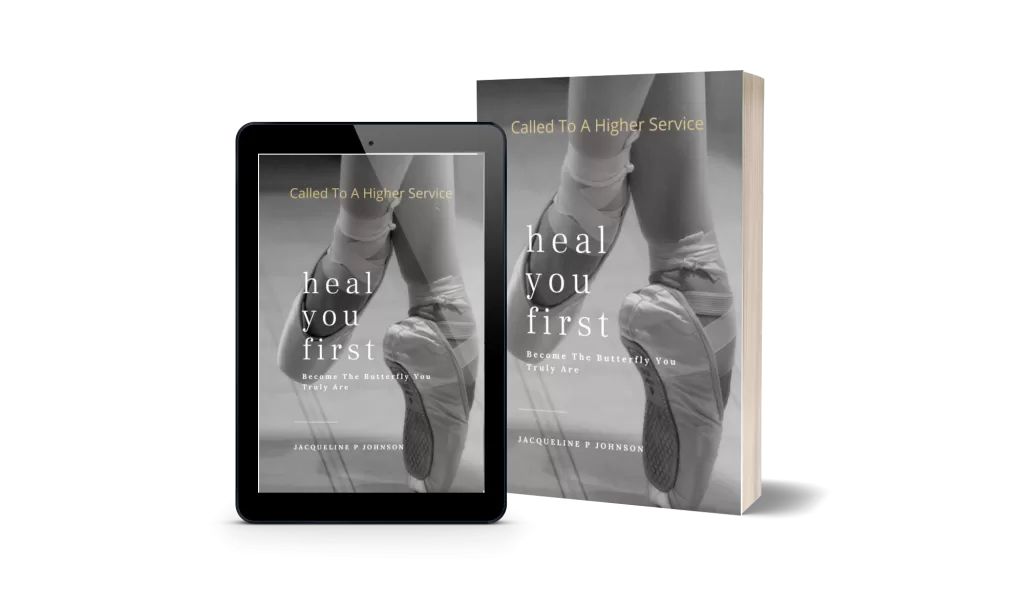
Are you longing to break free from the chains that bind you and discover the path to true healing and growth? In “Heal You First,” embark on a biblical journey of self-discovery and inner transformation.
Discover the Power of Faith and Fearlessness:
A Transformative Metamorphosis: Confront challenges, embrace storms, and emerge stronger. “Heal You First” is not just a book. It’s a transformative guide that uses Bible verses with practical steps for inner healing. Are you ready to embrace the biblical path to healing and become the powerful, magnificent vessel God has created you to be?
HEAL YOU FIRST, GET THE BOOK

Read more Lifestyle Features
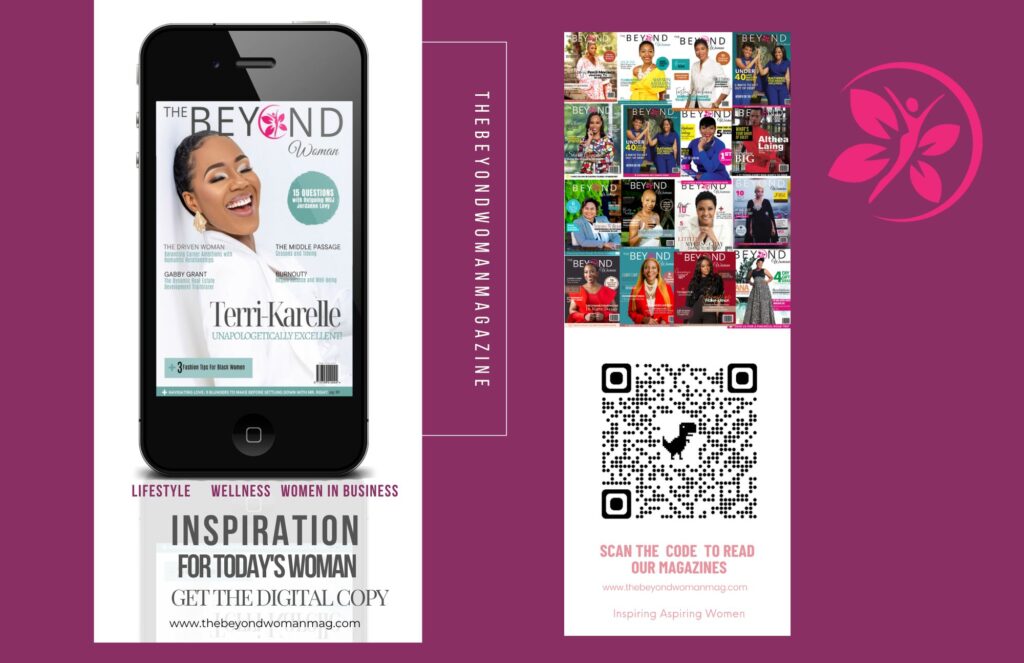
Read Our Magazine
WE INVITE YOU TO LISTEN IN ON OUR LATEST PODCAST CONVERSATION. HELP OUR PLATFORM GROW BY SUBSCRIBING ON YOUR FAVOURITE PLATFORM.
What does it mean to build a life of impact without losing yourself in the process?
In this episode of TheBeyondWoman Conversations Podcast, host Jacqueline Johnson sits down with Trinidad and Tobago entrepreneur, author, and systems strategist Krystle Phillips for an honest conversation about leadership, visibility, entrepreneurship, and the evolution of personal identity.
As the founder of multiple businesses, including Your Equipment Suppliers (YES), Krystle has dedicated her career to helping entrepreneurs, farmers, and agro-processors across the Caribbean build stronger, more sustainable businesses through better systems and operational design. She is also the author of Breaking Barrels: Unparenting the Parent. And Misdiagnosed: Why Micro Agro-Processors Are Set Up to Fail.
Together, Jacqueline and Krystle explore what it means to step into greater visibility without sacrificing authenticity. Why sustainable success is built on systems rather than constant hustle. And how Caribbean women can embrace both strength and femininity while leading with confidence.