I am the mother of one of the world’s most brilliant, beautiful, gifted, and uniquely wired souls. To say that lightly would be a disservice to her and to the journey that shaped us both. She did not arrive in my life to be raised in the conventional sense. She arrived to be recognized, protected, and understood in a world that often struggles to honor what it cannot categorize. Life is not always learned from books or rules. Sometimes it teaches through a soul entrusted to you. Long before I had language for it, I knew my daughter experienced the world differently. From infancy, she revealed abilities that felt almost otherworldly. She spoke at six months old. Before she turned one, she could identify animals, imitate their sounds, name colors, write, and speak clearly. I taught her to count to five in English; she counted to twenty on her own, then began counting in Spanish without ever being taught.
She read by age two. By third grade, she was solving seventh-grade math problems. As math became more complex, something extraordinary revealed itself: while others needed formulas and steps, she simply saw the answer. Her brain did not work through problems. It recognized patterns instantly. She had a photographic memory. She could look at a page once and recite it word for word. Adults were often stunned—sometimes confused, occasionally intimidated. A university mathematician in Jamaica once watched her solve advanced problems effortlessly and admitted he could not understand how she arrived at the answers so quickly, without visible steps.
What he witnessed was not guessing. It was a different neurological pathway.
Socially, though, the world felt heavier for her than for other children. She withdrew. She masked. She absorbed far more than she expressed. What others saw as distance, I felt as sensitivity. I have an extensive list of her accomplishments, and every day she reminds me of her limitlessness. She is not just gifted; she is extraordinary.
Yes, I am the proud mother of one of the greatest gifts this universe has ever known—and I could speak about her endlessly.
It was not until she was in college that we received a formal diagnosis: Asperger’s autism, now understood as part of Autism Spectrum Disorder (ASD Level 1). That diagnosis gave language to what we had already lived. Asperger’s autism often comes with extraordinary intelligence, intense focus, strong pattern recognition, and heightened sensitivity to sensory input and social environments. My child, however, exists far beyond averages. Her abilities stretch past what most people, autistic or not, experience. After her diagnosis, professors and coaches began to truly see her.
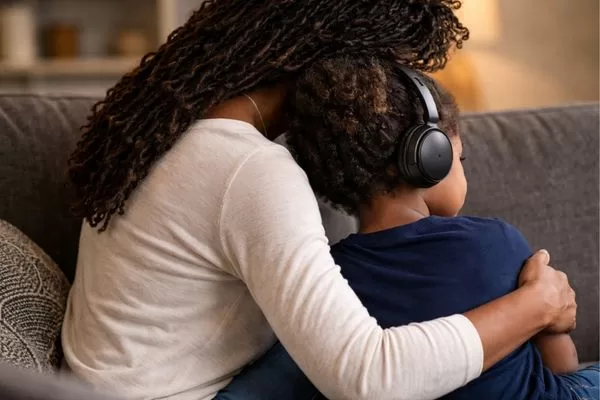
They were blown away by her beautiful mind—her insight, creativity, and capacity for advanced thinking. But more than that, they chose compassion. They recognized when she was overstimulated and allowed her space to regulate. They understood that the large earphones she wore were not a distraction but a tool, and they worked with her rather than against her. When she asked questions they could not answer, they admitted it. They encouraged her curiosity. They asked her to explore further through research and writing.
That is what compassion looks like.
It is a choice. It requires awareness, patience, and a willingness to meet someone where they are. It is not always easy—but it is always transformative. With even small accommodations, a child who might struggle in a conventional environment can thrive and reveal the depth of their brilliance.
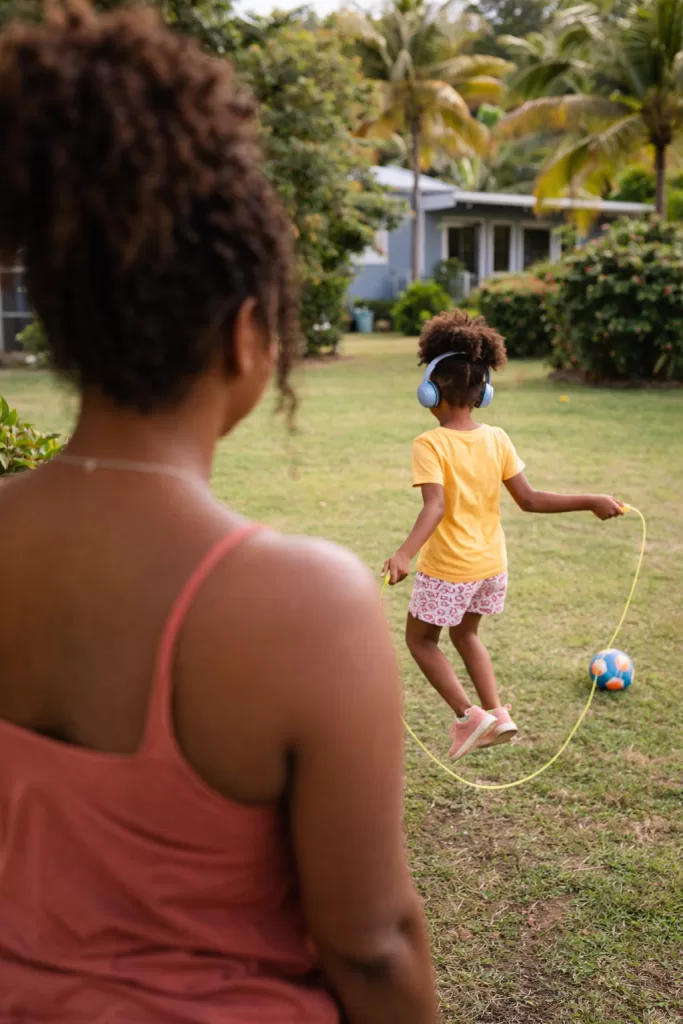
Autism is not one experience.
It spans a wide and varied spectrum. Some children are non-speaking and require lifelong, hands-on support. Their parents live in constant advocacy mode—managing therapies, navigating misunderstanding, and worrying deeply about long-term care. Daily life can be physically and emotionally exhausting. And the truth is, these parents are doing all of this while still trying to survive their own lives—bills, responsibilities, health challenges, emotional stress. There is no pause button.
People often say God does not give you more than you can bear. But there are quiet moments when parents wonder: How will I manage? Am I strong enough for this? Those thoughts often come with guilt. With silence. With exhaustion that is rarely spoken out loud.
Other children present differently. They speak fluently. Perform well academically. Appear independent. They are often labeled “high functioning”—a term that hides the cost of functioning. They mask their confusion. Force eye contact. Rehearse conversations. Endure sensory overload in silence. And when they get home, they unravel. Their parents live in a quieter struggle: invisibility.
If a child does well in school and does not “look disabled,” people assume nothing is wrong. But autism is neurological, not visual.
A child can be gifted and still be overwhelmed.
Successful and still anxious.
Present and still struggling.
Functioning does not mean thriving and it certainly does not mean functioning without cost. Many children hold themselves together in structured environments, only to release everything in the safety of home. Parents witness what the outside world never sees—meltdowns, shutdowns, emotional flooding.
And in the middle of it, they question themselves:
Am I doing enough? Am I doing this right?
There is another layer that cuts even deeper. When a child or young adult says, “I am autistic,” they are sometimes met with denial:
“There’s nothing wrong with you.”
“You’re just being dramatic.”
“Stop labeling yourself.”
These responses often come from ignorance, not cruelty—but the impact is real.
Dismissing a neurological difference does not erase it.
It teaches a person to doubt themselves. To suppress their needs. To feel unseen where they should feel safest.
Sometimes the deepest wounds do not come from strangers, but from those who believe love means pushing someone to be “normal.” Without awareness, even love can harm. Autistic individuals are not broken, they are navigating a world that was not built for their nervous systems.
Across the spectrum, parents carry emotions they rarely voice: fear, grief, guilt, exhaustion. These feelings do not make them weak, they make them human. And still—they show up. Every single day.
Misunderstanding autism damages families. Without awareness, behaviors are mislabeled as disrespect, laziness, or poor parenting. One parent may push harder. Another may protect more. Tension builds and the marriages becomes strained. Siblings feel the shift while extended families criticize what they do not understand. Many families do not break from lack of love, they break from lack of language, tools, and support. Autism does not divide families, misinterpretation does. When we begin to understand that behavior is communication, that shutdown is protection, that withdrawal is regulation—we move from blame to compassion.
Before I had terminology, I had intuition.
I followed my child—not public opinion.
This is what that looked like:
- I observed without judgment
- I nurtured her interests, especially in science and complex ideas
- I showed up in her world—karate training, tournaments, sports
- I coached her in lacrosse, building her strength and endurance
- I expressed love through action, through care, through presence
- I honored her boundaries—even when I did not fully understand them
As I learned more, I gave her more.
More independence.
More trust.
More space to be fully herself.
I spoke her language. When she touched my nose, I responded the same way. When she texted “meow,” I answered “roar.” I never made her feel strange for how she connected. I created a space where she could speak freely—without fear, without judgment. And when she was ready, I listened. I did not try to shape her into the world.
I made sure she felt safe existing within it. I do not have all the answers. No one does. Autism is as diverse as the people who live it. Every experience is different. But if sharing this helps even one person—one parent, one teacher, one family—then it matters. Because small shifts in understanding create profound change.
To families anywhere on this spectrum:
- Observe before reacting
- Listen beyond words
- Respect sensory boundaries
- Do not measure struggle by appearance
- Seek support early if something feels different
- Find community
- Give yourself compassion
- Educate together to protect your relationships
Your child is not broken. Your child is different. And different does not mean less. Autistic children are not problems to be solved. They are people to be understood.
Some will speak in words.
Some in patterns.
Some in silence.
All deserve dignity.
I did not raise my child with manuals, I raised her by listening, by watching and by loving beyond what I understood at the time. Life did not give me a conventional child.
Life gave me a teacher.
And through her, I learned this:
The greatest intelligence is not just brilliance of mind, it is the courage to love what the world has not yet learned to understand.
Read more Lifestyle Features
Read Our Magazines
Listen To Our Latest Podcast
Building Confidence and Business: Michelle Baptiste on Turning Vision Into Impact
In this episode of TheBeyondWoman Conversations Podcast, we sit down with Caribbean entrepreneur Michelle Baptiste, founder of Selecfit, for a real conversation about what it takes to turn an idea into something meaningful. Michelle shares her journey into entrepreneurship — from the early stages of building her brand to navigating challenges, building confidence, and staying committed to her vision even when things felt uncertain.
This conversation goes beyond business. It’s about resilience, self-belief, and the courage to start before you feel